July 11, 2026 · Mickey Clinard
Why is AI making some of your problems worse instead of better?
AI doesn't fix a broken business. It makes the break more obvious, faster. The fix isn't a better tool. It's fixing what's underneath it.
A builder I work with came to me wanting to know one thing: should he switch from Grok to Claude or ChatGPT. He'd seen other builders on YouTube talking about their AI setups and felt like he was falling behind.
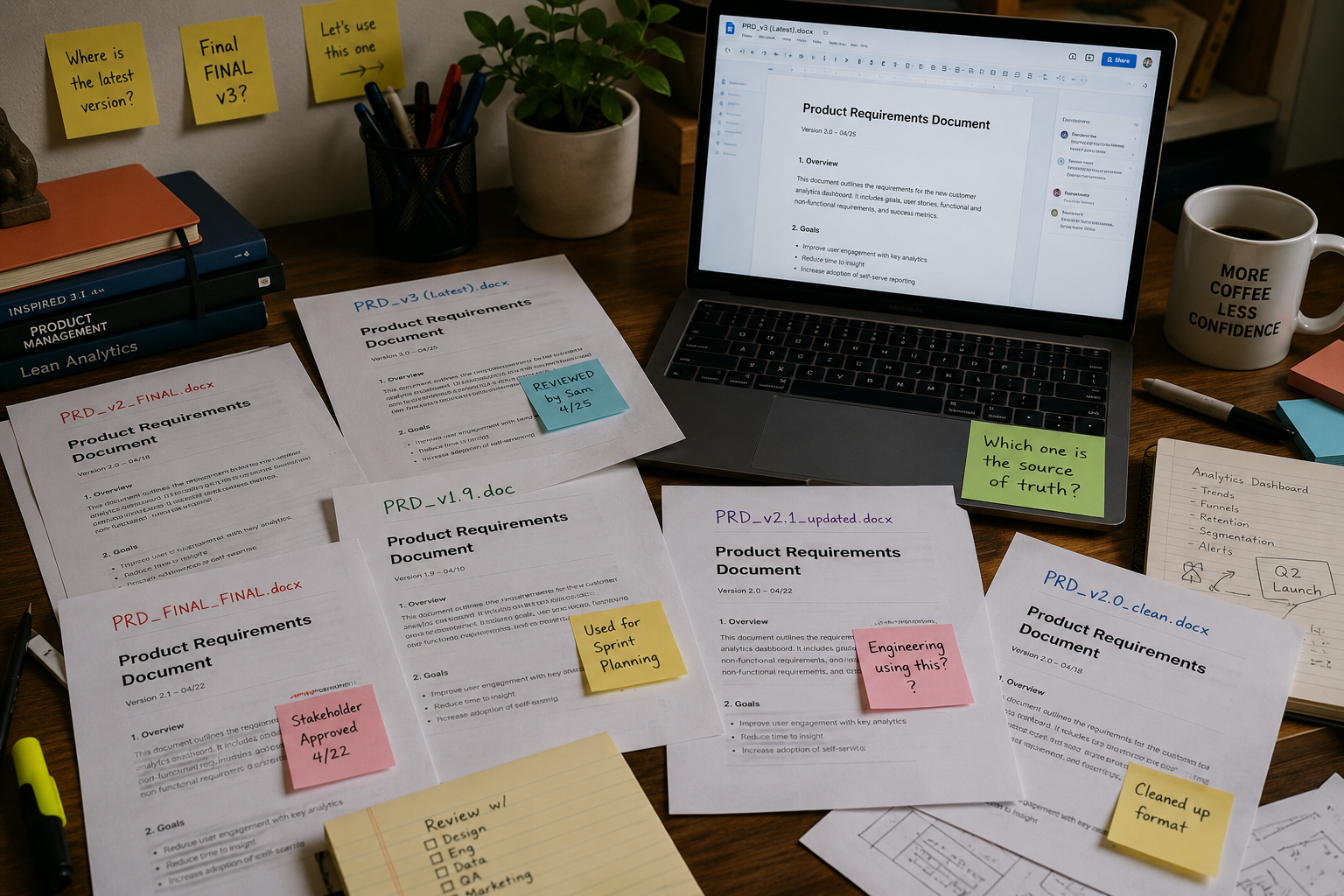
Ninety minutes into our first session, we hadn't talked about AI tools once. We were talking about the fact that his four-person team runs on emailed files, no shared drive, and no single place where a document is the real one. He didn't have an AI problem. He had a foundation problem, and any AI tool he bolted on top of it was going to make that foundation problem worse, not better.
That's the pattern behind most AI disappointment I see, and the data on it is louder than most owners realize.
Key takeaways
- Most "AI didn't work for us" stories are actually "the process underneath it was already broken" stories.
- RAND found more than 80 percent of AI projects fail to deliver the business value they were supposed to. The tool is rarely why.
- AI amplifies what's already there. Good process gets faster. Bad process gets faster and more expensive.
- A real client, a custom home builder, learned this firsthand. His AI question turned into a file-sharing question, and that's what actually needed fixing first.
- Fixing the foundation is usually cheaper and faster than the AI tool people were about to buy.
Why do so many AI projects fail to deliver?
The numbers are worth sitting with for a second. RAND's research on enterprise AI projects found that more than 80 percent fail to deliver the business value they promised, roughly double the failure rate of ordinary IT projects. MIT's Project NANDA looked specifically at generative AI pilots inside companies this year and found that 95 percent never show up as a measurable difference in the P&L. Only about 5 percent stick.
Here's the finding that matters most for a small business owner. S&P Global Market Intelligence tracked this over time and found that the share of companies abandoning most of their AI initiatives jumped from 17 percent to 42 percent in a single year, with the average organization scrapping close to half its AI projects before they ever reached production. That's not a story about the technology getting worse. It's a story about the same gap this article is named for.
Translate that out of research language. The tool usually works fine. What it's working inside usually doesn't.
What does "AI amplifies what already exists" actually mean?
I've said this in front of enough chamber crowds that it's basically our signature line at this point: AI doesn't fix broken foundations. It amplifies them.
That's not a metaphor. It's closer to a law of how the technology behaves. AI is fast, and it's consistent, and it does exactly what your process tells it to do, even when your process is the problem. If your team has a good, documented way of handling client intake, AI speeds that up and the whole thing gets better. If your team has three different people doing intake three different ways with no source of truth, AI doesn't notice or care. It just does whatever inconsistent thing is put in front of it, faster, and now the inconsistency is harder to catch because it's moving quicker than anyone can watch it.
Three foundation gaps show up more than any others in the businesses we work with:
No single source of truth. Files get emailed around. Everyone has their own copy, and nobody is fully sure which version is current. AI can summarize any one of those copies beautifully. It can't tell you which one was right.
No documented process. The work happens the way it happens because that's how it's always happened, and it lives in one or two people's heads. AI has nothing to learn from and nothing to standardize, because there was never a standard to begin with.
No clear ownership. Nobody is actually responsible for the outcome, just for their piece of it. AI can generate a draft, a summary, a recommendation. It cannot make someone accountable for using it well, and if nobody owns that, the output just sits there.
None of these are AI problems. They're the kind of thing that was already costing a business time and money before anyone mentioned AI. AI just makes them visible faster, and sometimes expensive faster.
What did a real business learn the hard way?
Back to the home builder. He runs a $10 to $12 million operation with three admin staff, and he came to his AI Clarity Session convinced the fix was picking the right chatbot.
The first ninety minutes told a different story. His team was working entirely inside Microsoft Office, no shared drive, no shared source of truth. A document existed in as many versions as people who had touched it. Scheduling pressure, miscommunication, and rework were already part of daily life, quietly, before any AI tool ever entered the picture.
Here's the part that matters. If he had bought an AI tool that week and pointed it at that mess, the tool would have done exactly what it was told. It would have summarized whichever version of the document it was fed. It would have drafted from whatever information was in front of it, accurate to that version and wrong for the business. The AI wouldn't have failed. The foundation underneath it would have, and the AI would have just moved that failure faster.
He left his first session with a first step that had nothing to do with AI: move the team to Google Workspace, set up a shared Drive as the actual source of truth. The AI conversation picks back up in his second session, now aimed at a foundation that can actually hold it.
How do you know if you have a foundation problem instead of an AI problem?
You don't need a consultant to get a rough answer. Ask yourself three questions before you evaluate a single AI tool.
Is there one version of the truth for the thing you're about to hand to AI, or several people's versions? If it's several, that's the first fix.
Could someone new on your team follow the process today without asking three people what to do? If the answer is no, there's no process to speed up yet, just habits in someone's head.
If the AI-assisted work came out wrong, would anyone specific be responsible for catching it? If you can't name that person, ownership is the gap, not the tool.
Answering yes to all three doesn't mean AI will definitely help. It means you're at least handing it something solid enough to amplify in the right direction.
What should you fix before you touch an AI tool?
Start with whichever of the three foundation gaps is loudest in your business. For most of the owners we talk to, it's the source-of-truth problem, because it's the one that's been quietly taxing the business the longest. Three steps get you there without a systems overhaul.
1. Name the one document or workflow that hurts the most. Look for the thing that gets touched by the most people and has the most versions floating around. Not everything. One thing.
2. Move it to one shared place, and retire the old copies. A shared drive, a single project folder, one spreadsheet everyone actually opens. The fix is usually boring. That's fine. Boring and solid beats clever and scattered.
3. Name who owns it going forward. One person checks that the shared version stays the real version. Without an owner, the old habits creep back in within a month.
Once that's solid, the AI question gets a lot easier to answer, because now you're asking where a fast, consistent tool can help a process that's already fast and consistent on its own. That's a much better problem to have than picking between three chatbots for a business that doesn't have a shared drive yet. It's also the same starting point we walked through in Train the People First: fix what the team can already see is broken before you add a tool on top of it.
Frequently asked questions
If AI amplifies problems, does that mean small businesses should wait to use it?
Not necessarily. It means the order matters. Fix the loudest foundation gap first, even if that fix is small, then bring AI in behind it. Waiting for everything to be perfect isn't required. Waiting until at least one thing is stable usually is.
How do I know if my process problem is big enough to matter?
If more than one person could tell you a different "right way" to do the same task, that's already big enough to matter. It doesn't need to be dramatic to be the actual bottleneck.
Isn't this just an argument for hiring an AI consultant instead of fixing anything ourselves?
No. Most of the three foundation gaps above get fixed with a shared drive, a written checklist, and a name attached to who owns the outcome. None of that requires outside help. Outside help is useful for figuring out which gap to fix first and where AI genuinely helps once it's fixed, not for the fix itself.
What's the fastest way to tell if an AI tool actually helped or just moved a mess faster?
Look at whether the output is more consistent than what a person alone was producing, not just faster. Speed without consistency is usually a sign the tool amplified a gap instead of closing one.
My competitor just started using AI and says it's working great. Doesn't that prove foundations don't matter?
More likely it proves their foundation was already solid enough to hold it, or they're using it on something small and low-stakes where a shaky process can't do much damage yet. Ask what they fixed before they started, not just what tool they picked.
AI doesn't fix broken foundations. It amplifies them.
That line isn't a slogan we came up with to sound smart. It's what we watch happen in real businesses, over and over, including the one in this article.
The businesses that get real value out of AI aren't the ones with the newest tool. They're the ones who did the less exciting work first: one source of truth, one documented process, one name attached to the outcome. AI speeds up whatever you hand it. Hand it something solid.